
Most traders don’t fail because of low IQ, laziness, or inability to learn. They fail because they don’t understand the psychology of this business. More specifically, they fail because they are overly critical and deeply afraid of making mistakes.
This fear shows up in two very common ways:
The first type of trader stays in preparation mode forever. They watch lessons, build systems, tweak rules, learn new strategies, and constantly “refine” their approach – but they never truly execute. Learning feels safe. Execution feels dangerous. As long as they don’t trade, their dream of being a successful trader stays intact.
The second type does start trading, but quits the moment reality doesn’t match their expectations. They place a few trades, experience losses or inconsistency, and quickly become discouraged because results aren’t instant. They expect to achieve financial freedom in a month. When that doesn’t happen, they lose motivation and often quit. They blame the markets, assume it’s too difficult, or simply not for them. But of course, it’s easier to come up with a comforting story than do the work required to get there.
It’s true – trading is not for everyone. But not because it’s too complicated or because you need to be born with certain abilities. It’s because most people are simply not prepared to be honest with themselves and endure the challenges required to succeed.
Trading Is a Skill, Not a Shortcut
A common problem with traders is that they don’t treat trading as a skill – they treat it as a get-rich-quick scheme.
A skill is built, not bought, not gifted, not passed down genetically.
No one expects to be good at riding a bicycle the moment they get on it. No one expects to drive perfectly on their first day behind the wheel. No one picks up a guitar expecting to know how to play right away. No one expects to become a CEO right after finishing business school.
But when it comes to trading, people somehow believe it should be different.
It isn’t.
Like any skill, trading follows the same progression: first you learn, then you practice, then you try, fail, and learn again. You repeat that process and gather feedback and experience.
The moment your training ends is not the moment you become a master of your craft – it’s the moment real growth actually begins.
The practice phase is where most traders fail.
Some traders try to practice with nothing to practice with.
They never completed any courses, dismissed theory, and never properly learned. They believe in learning purely through doing. While it might sometimes work, the majority of such traders fail miserably.
They don’t understand that learning is not a waste of time – it’s how you understand the markets and learn from people who have already spent years studying and making mistakes you don’t have to make.
You don’t have to burn your hand to learn that fire is hot.
In the same way, you don’t have to blow a trading account to understand that risk management is important. Completing a single lesson on risk management can prevent you from ever blowing an account.
Trying to learn only through practice is not just ineffective and dangerous – it can also turn toxic. Learning and building good habits is far easier than unlearning bad ones.
We see this all the time. Traders who come to our academy with no prior training often do better than those who already started trading before working with us. Those traders keep falling back into old habits, breaking rules, and repeating the same mistakes because they can’t control themselves.
The takeaway here is simple: don’t try to learn everything through trial and error alone. In trading, every mistake costs money, and there are many ways to mess things up. Don’t make it harder than it needs to be.
Other traders come more prepared. They learn first and only then start practicing.
The problem is – they don’t practice effectively.
To get better at trading(or anything) you don’t just need repetition. You need feedback. That means journaling and carefully reviewing every trade: understanding what you’re doing right and what needs to be fixed.
Many traders say they don’t have time for this or that it’s too complicated. In reality, it takes 5–10 minutes per trade at most. And if you’re doing so many trades that you can’t review them properly, that’s feedback too. It usually means you’re overtrading and need to slow down.
Practice alone does not make you good at anything. That’s why there are traders with years of experience and nothing to show for it. They’re just running in circles.
The only way you grow is by analyzing results, repeating what works, and fixing mistakes.
Learn → Practice → Review → Optimize → Improve
This applies not only to trading, but to any field you want to get good at.
Fear of Execution and Outcome Obsession
Other traders actually practice well – but they practice too little. They avoid taking trades because they want every trade to be perfect. They’re not just afraid of losses.
They’re afraid of confirming their biggest fear: “What if I’m not cut out for this?”
By being afraid of being wrong, they sabotage their own progress. Instead of practicing, they hesitate and procrastinate.
This is the same reason many entrepreneurs fail in business. Not because they don’t know how to build a product, but because they’re afraid to release and fail.
They just keep preparing, convincing themselves that preparation equals productivity, when in reality they’re just protecting their ego and their dream.
If you only stay in learning mode, or if you stop trading every time you hit a losing streak, you’re not avoiding failure – you’re avoiding feedback. And without feedback, improvement is impossible.
Another mistake is focusing on outcomes instead of improvement.
If you want to succeed in trading – or any performance-based field – you must stop obsessing over results while you’re still in the practice stage.
Stop worrying about how much money you’ll make this month, how fast you’ll become profitable, or when you’ll finally quit your job.
Those outcomes are a byproduct.
Every person who built success through work – not inheritance or luck – will tell you the same thing: when you focus on growth, money and success follow. When you obsess over money, you get nowhere.
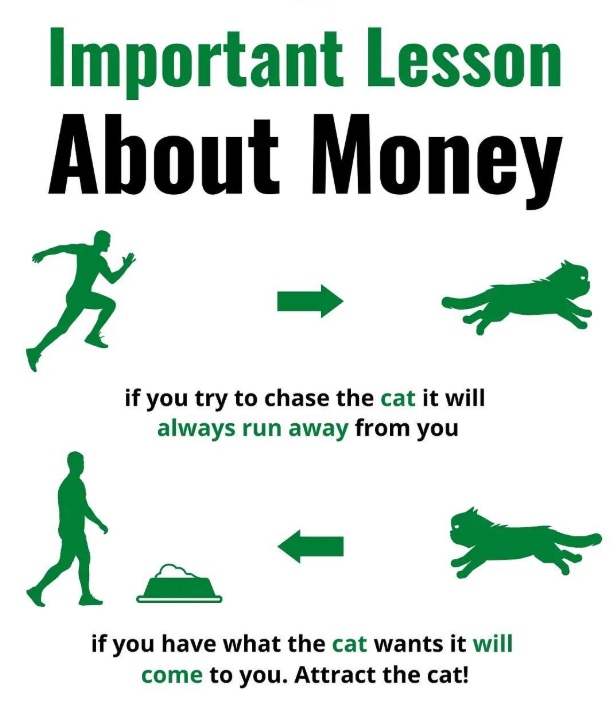
Like the cat analogy:
If you chase the cat, it runs away.
If you have what it wants, it comes to you.
How Growth Actually Happens
Your real goal should be simply to get better. And to get better at trading, you need to learn and then apply that knowledge in live market conditions.
Start with a demo account. It removes financial risk and allows you to do the one thing that matters most in the beginning: execute. Take trades. Make mistakes. Collect data.
Don’t set overly strict filters for setups when you first start practicing. If you don’t allow yourself to make mistakes, you won’t learn and you’ll never exit the practice stage.
At the beginning, you should focus on taking more trades, not less. Not to overtrade, but to gather data.
Some trades will be bad. Some will be good. At this stage, you shouldn’t focus on how much you make yet or draw conclusions about your strategy. You’re just collecting data.
Then you use that data to narrow things down. You stop taking every setup and focus on the ones that tend to work most often.
First, you pay to collect data. Then you use that data to build a system that consistently pays you.
Just like real estate: you spend money to buy a house, rent it out, and collect income regularly. Same concept, different industry.
You have to spend money to make money.
Data, Feedback, and Detachment From Identity
Many traders underestimate how much data they actually need. They take 5 or 10 trades, hit a few stop losses, and immediately conclude that the strategy doesn’t work or that they’re bad traders.
That’s not logic – that’s emotion. Ten trades is not data. It’s noise.
First, your focus should be executing trades, reviewing results, and identifying which styles, techniques, and setups work for you and which don’t.
You also need to be careful how you interpret losses.
A results-focused trader thinks: “I lost this trade because I’m a bad trader.”
A growth-focused trader thinks: “I lost this trade. I need to understand where I went wrong, and how can I prevent this mistake in the future?”
They don’t tie outcomes to identity.
This is why, during practice, you should care far less about P&L and far more about execution: entry timing, stop-loss and take-profit placement, trade management, consistency, and discipline.
Skills come first. Outcomes follow.
Think of it like stepping into a race car for the first time. If your focus is setting the fastest lap immediately, you will fail. You haven’t developed the ability to compete yet. First, you learn control – braking, cornering, handling. Speed comes later.
Trading is no different.
Over time, patterns emerge. You’ll notice similarities in losing trades: late entries, lack of confluence, weak confirmation, poor stop loss placement, unrealistic targets. Those insights allow you to improve.
Next week, you trade less – but better.
It’s a cycle: practice, review, adjust. Practice, review, adjust.
This is also why mentorship and community matter. Most people can’t clearly see their own mistakes. External feedback helps uncover blind spots you didn’t know existed.
But that requires being coachable.
People who can’t accept feedback or take correction personally tend to stagnate. They interpret feedback as insult. That’s an ego problem – and ego is very expensive in trading.
Conclusion
Businesses are built. Traders are developed. Neither is born perfect. Allow yourself to make mistakes. Stop expecting perfection before you’ve earned competence. Practice more, not less. Collect data. Focus on the process, not the outcome.
If you can accept that, you already have a massive psychological edge over most people who try and fail to succeed in this business.