

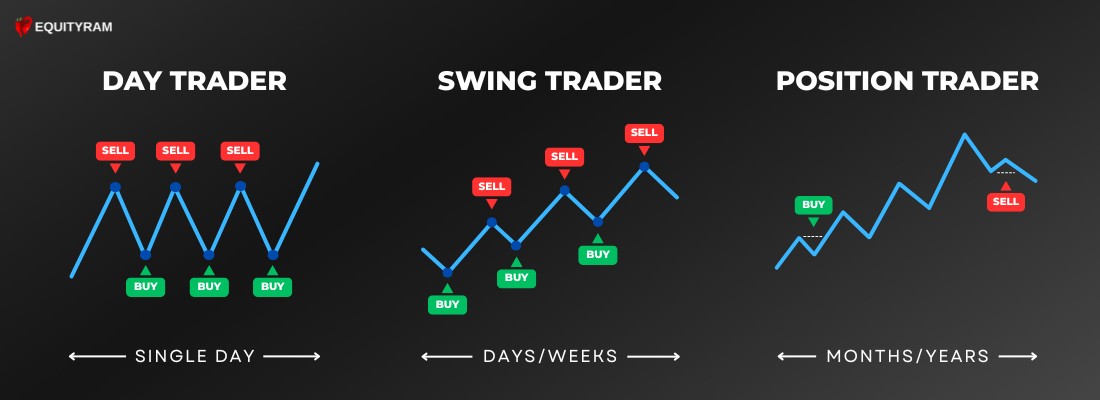
Before you start trading, you’ll have to make one important decision: choosing a trading style.
Not all traders trade the same way. Some trade actively, opening and closing positions within minutes. Others hold trades for weeks, months, or even years. Each trading style comes with its own strategies, benefits, and risks.
There are no good or bad trading styles. And because of that, there is no single “best” trading style either. There are only styles that fit you – and styles that don’t.
Before choosing a trading style, it’s also important to understand that markets tend to be more predictable in the long run and less predictable in the short run.
That’s why many people see long-term investing in stocks and ETFs as the easiest way to grow their money, while short-term trading is often considered more difficult. However, when done properly, active trading can deliver faster, better results than simple “buy and hold” investing.
Each trading style requires a different strategy, different rules, and a different way of managing risk. More active styles require deeper market understanding, more advanced strategies and stricter rules for risk management.
When choosing a trading style, you shouldn’t focus on which one sounds the most exciting or profitable. Instead, you need to focus on which style actually fits you – your personality, your daily schedule, your goals, and your tolerance for pressure and risk.
Many traders make the mistake of jumping straight into very active trading, hoping to make money quickly. They try fast-paced strategies, don’t spend enough time learning and practicing, rush into live trading too soon, get overwhelmed by the pressure, and eventually burn out.
Because they never learned how to differentiate between trading styles, they start to believe that all trading is like this. As a result, they give up on trading altogether, thinking the financial markets simply aren’t for them.
The truth is, there is a trading style for everyone. If very active trading feels too intense, you can always move to a slower, more structured approach. In trading, there are no one-size-fits-all strategies, and just because one strategy doesn’t work for you doesn’t mean trading itself isn’t for you.
That’s why it’s important to understand the different trading styles that exist and explore them properly before committing to one.
In this article, we’ll break down the most common trading styles and explain each of them in detail, so you can decide which approach fits you best.
Types of Trading Styles
While there are many different trading styles, they can generally be grouped based on how active they are and how much time and involvement they require.
Trading styles fall into three main categories: active, semi-active, and passive.
Some styles require constant market monitoring and fast decision-making, while others move at a slower pace and require far less daily involvement. Understanding these categories makes it much easier to find the best style for you.
Active Trading Styles
Active trading styles require regular involvement. You’ll need to make quick decisions, enter and exit trades frequently, and hold trades for short periods only (minutes or hours).
Active trading demands:
• Strong discipline
• Emotional control under pressure
• Structured, rule-based strategies
• Fixed rules for risk management
• Regular screen time and practice
Because trades are frequent, these styles can produce results quickly. But if used incorrectly, they can also burn money very fast. That’s why active trading requires proper education and extensive practice.
The most active trading styles are scalping and day trading.
Semi-Active Trading Styles
Semi-active trading styles sit between active trading and long-term investing. They offer more flexibility and are easier to combine with work, studies, and daily life.
Trades usually take days or weeks to play out. Because of this, position sizing becomes more important – you need to give the market more room to move, which means working with smaller positions.
The main semi-active style is swing trading.
This approach offers moderate returns, lower stress levels, and better sustainability. Many traders start with swing trading and move to more active styles later once they gain confidence and consistency.
Passive Trading Styles
Passive trading styles involve holding trades long-term, from several months to years.
These styles are usually preferred by traders whose priority is capital preservation and protection against inflation. Decisions are based mainly on fundamental analysis and long-term growth potential rather than short-term price fluctuations.
Passive trading styles include position trading and investing.
This is the slowest but most stable way to grow capital. It’s closer to structured saving than active trading – you invest regularly and allow time to do the heavy lifting.
Want to get properly trained before you start trading?
Our Trading Bootcamp gives you clear step-by-step lessons, direct mentor guidance, and advanced strategies designed to help you learn to invest like professionals do.
The 5 Main Trading Styles
Now that we understand the different types of trading styles, let’s break down the five main ones and look at how each of them is used in practice.
1. Scalping
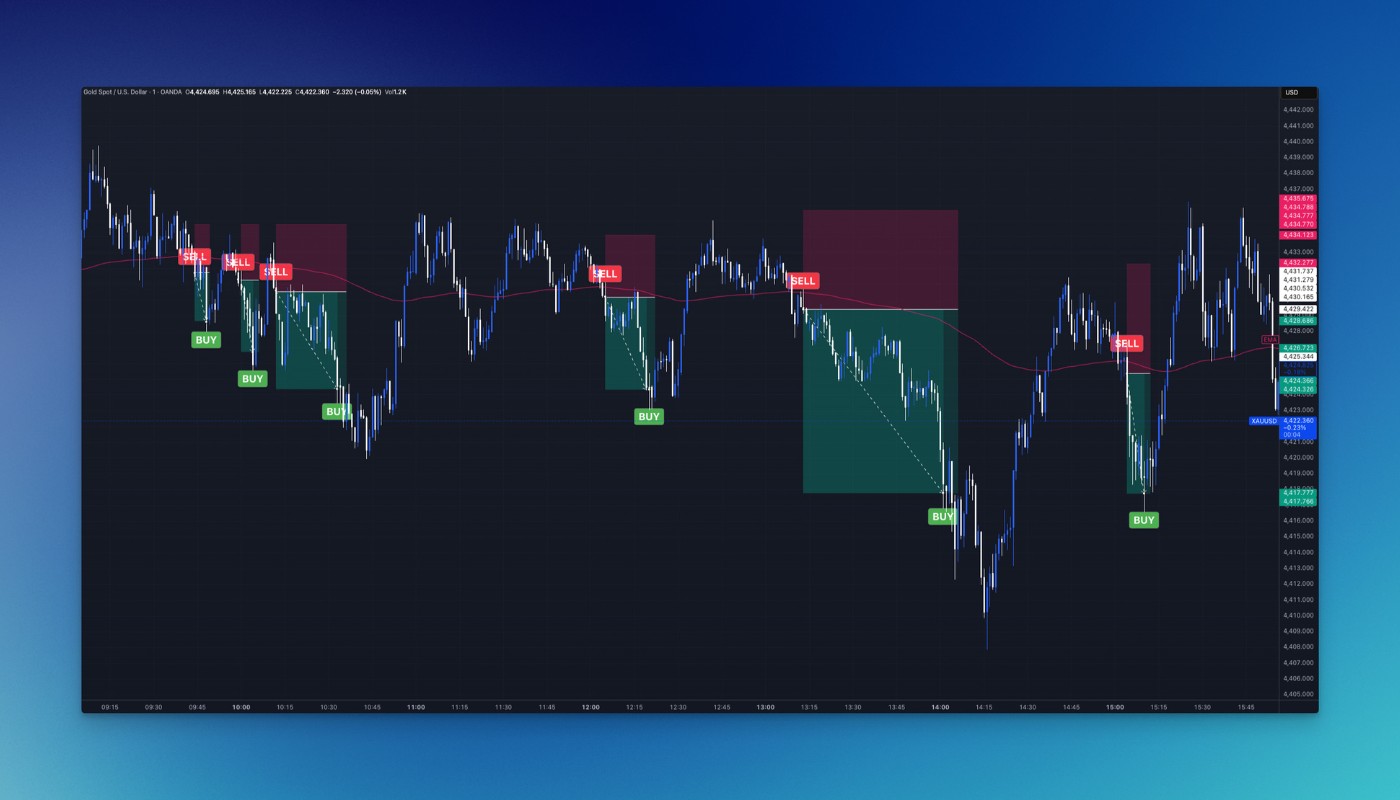
Scalping is the most active of all trading styles.
A scalper aims to profit from very small price movements, holding positions for short periods only(minutes or even seconds). The goal is not to catch long-term trends, but to take advantage of short bursts of momentum.
Scalpers focus on short-term market movements. They wait for the price to start moving, ride the move, and stop trading once momentum fades.
Because of this approach, scalpers typically place a large number of trades throughout the day. Professional scalpers can sometimes execute dozens of trades in a single session.
This style demands high focus, fast decision-making, and strong emotional control. You need to be comfortable sitting in front of screens for long periods, handling stress, and tolerating frequent and fast winning and losing streaks.
Scalping is a high-risk, high-reward approach. Profits can come fast, but if risk is not properly managed, losses can happen quickly.
Scalpers need volatility. They rely heavily on technical analysis and trade very short timeframes such as the 30-second, 1-minute, and 5-minute charts.
Most scalpers focus on a single asset during a trading session – usually the most volatile instrument with the cleanest price action.
With this style, your mindset needs to be on point. Because profits and losses happen quickly, emotions can easily take over and scalping can quickly turn into emotional gambling.
Although it’s fast-paced, scalping still requires patience – just a different kind. You need to stay alert, wait for the right moments to trade, remain disciplined and know when to stop trading when things aren’t going your way.
This style is exciting, but not everyone is built for it. Scalping can burn traders out quickly, which is why many traders combine it with other styles to reduce risk and mental fatigue.
Scalpers also need to trade during peak market hours, when volatility is highest. This style doesn’t work well during quiet sessions or late hours.
2. Day Trading
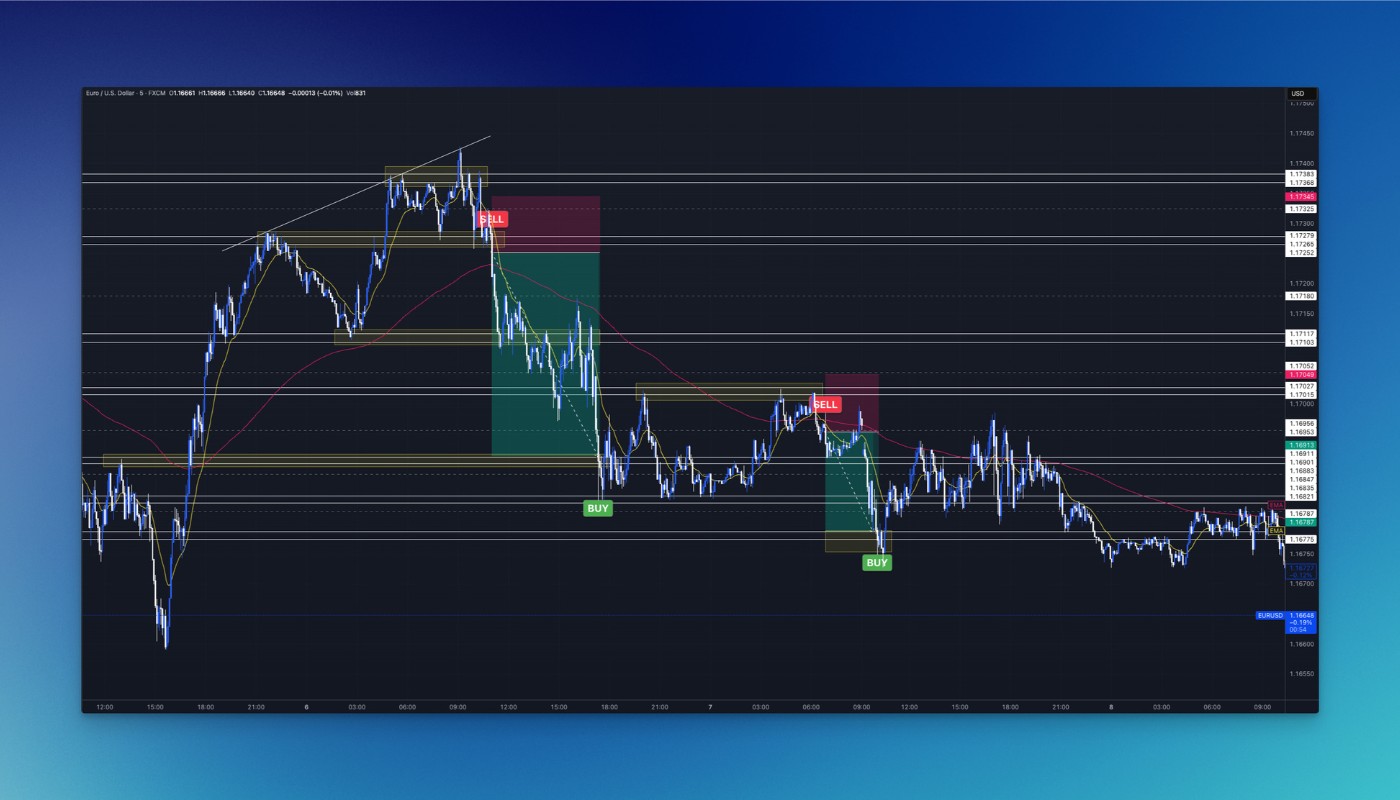
Day trading is what most people imagine when they think about trading.
Day traders hold trades for minutes to hours, usually closing them within the same day. The idea is to take advantage of the price movements that happen throughout the day rather than chasing long-term trends.
The term day trading originally comes from the stock market, where markets close at the end of the day. Day traders who trade stocks usually exit all their positions before the market closes to protect themselves from overnight gaps.
Markets like Forex and Crypto have different “business hours”. Forex trades 24/5 and Crypto trades 24/7, which means day traders in these markets don’t strictly have to exit trades before the day ends. That said, many still prefer to close their positions at the end of they day to avoid unexpected changes in market direction.
Day traders focus on daily trends and short-term volatility. They trade what’s active on that day rather than holding positions for long periods.
This style still offers an active approach with the potential for fast results, but with more breathing room and less stress than scalping. Day traders place only a few trades during the day and are generally more selective with their entries.
They rely mainly on technical analysis and volatility caused by daily economic events. Day traders wait for clear setups and strong confirmation signals before entering trades to avoid getting trapped by misleading market movements.
The most commonly used chart timeframes for day trading are the 5-minute, 15-minute, 30-minute, and 1-hour charts.
Day traders usually limit the number of assets they trade. Once they become familiar with how certain instruments move, they can trade them repeatedly. Each asset has its own “personality”, and understanding it improves consistency. This is why practice matters – once you learn the behavior and patterns of an asset, results tend to improve.
Risk management is a crucial part of day trading.
Before placing a trade, day traders always decide where they will exit if the market moves against them. Every trade is planned in advance, with a predefined stop-loss that limits risk to a fixed percentage or dollar amount.
Day traders focus on cutting losses short and only take trades where the potential reward clearly outweighs the risk.
Day traders who don’t use fixed risk rules often struggle to find consistency. Without clear limits in place, losses can quickly spiral out of control, wiping out the gains from multiple winning trades.
Proper diversification and an understanding of intermarket correlations also matter a lot. Many traders unknowingly take the same trade across highly correlated assets, thinking they are diversified, when in reality they are stacking risk. Since those markets move together, losses can multiply quickly and cause fast drawdowns.
Effective day trading isn’t about winning every trade – it’s about keeping losses smaller than winnings, staying consistent, and protecting capital.
Day trading works best during highly active market sessions, such as the London session or the start of the US session. Outside of these hours, opportunities become limited, which is why day traders need to be available during specific times of the day.
3. Swing Trading
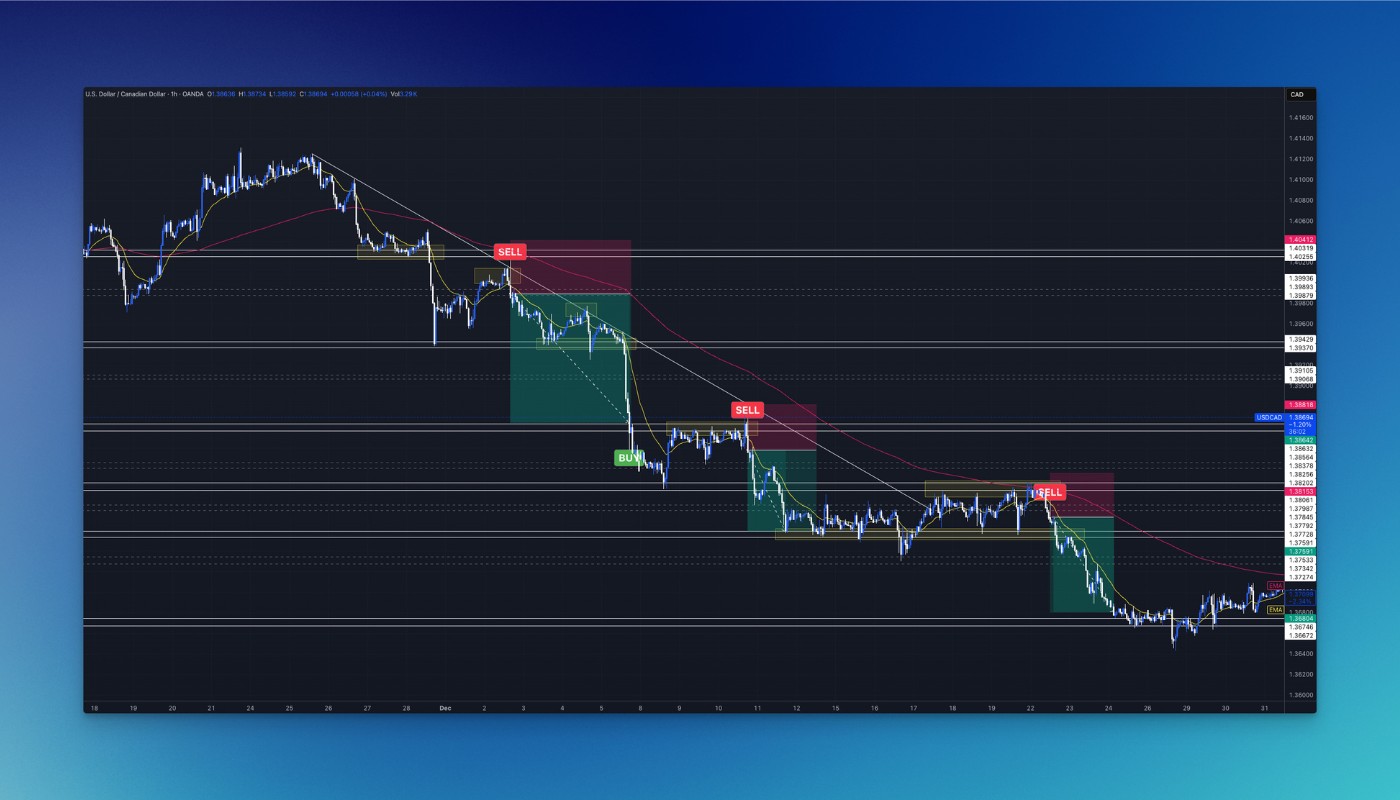
Swing trading is a semi-active trading style that involves holding trades for slightly longer periods, usually from a few days to several weeks.
Swing traders focus on short- to medium-term market trends, which helps filter out market noise and focus on stronger, more established price trends.
Swing traders usually don’t rely on charts alone when making decisions. They take into account fundamental factors, economic developments, and real-world events that influence market prices, instead of reacting only to short-term price movements.
That said, technical analysis is still a core part of swing trading. The style gets its name from trading the price swings that form within trends.
Just like day traders, swing traders need solid strategies, clear setups, strong confirmation signals, and strict risk control to achieve consistency. Risk is managed in a similar way, but swing traders are typically far more selective with the setups they trade and focus only on the highest-quality ones.
Because of this, swing traders usually place only a few trades per week.
Swing traders also tend to use broader watchlists. Sticking to just one or two assets can hurt performance, as setups may sometimes take weeks to form. Having more assets in the watchlist allows traders to stay patient and wait for quality opportunities instead of forcing low-quality trades out of boredom.
The most commonly used timeframes for swing trading are the 1-hour, 4-hour, and daily charts.
While swing trading is far less stressful than active trading and gives you more time to analyze and plan trades, it requires significantly more patience. Trades take longer to develop and feedback comes more slowly, meaning progress and practice periods take longer too.
This style works especially well for people with full-time jobs or other responsibilities, as you don’t need to watch charts all day. You can analyze markets in your free time, plan trades in advance, and use price alerts to manage positions.
Learning takes longer because trades play out more slowly, but many traders find swing trading more sustainable, balanced, and easier to maintain long-term.
For most traders, swing trading is often the best place to start. It’s active enough to deliver results, but slow enough to allow proper analysis, planning, and emotional control. Because trades take longer to develop, traders have more time to think, learn from mistakes, and refine their strategies without constant pressure.
Many traders begin with swing trading and later transition to more active styles like day trading once they gain experience and confidence. Others stay with swing trading long-term because it fits their lifestyle and delivers steady results without the stress and time commitment of active trading.
4. Position Trading
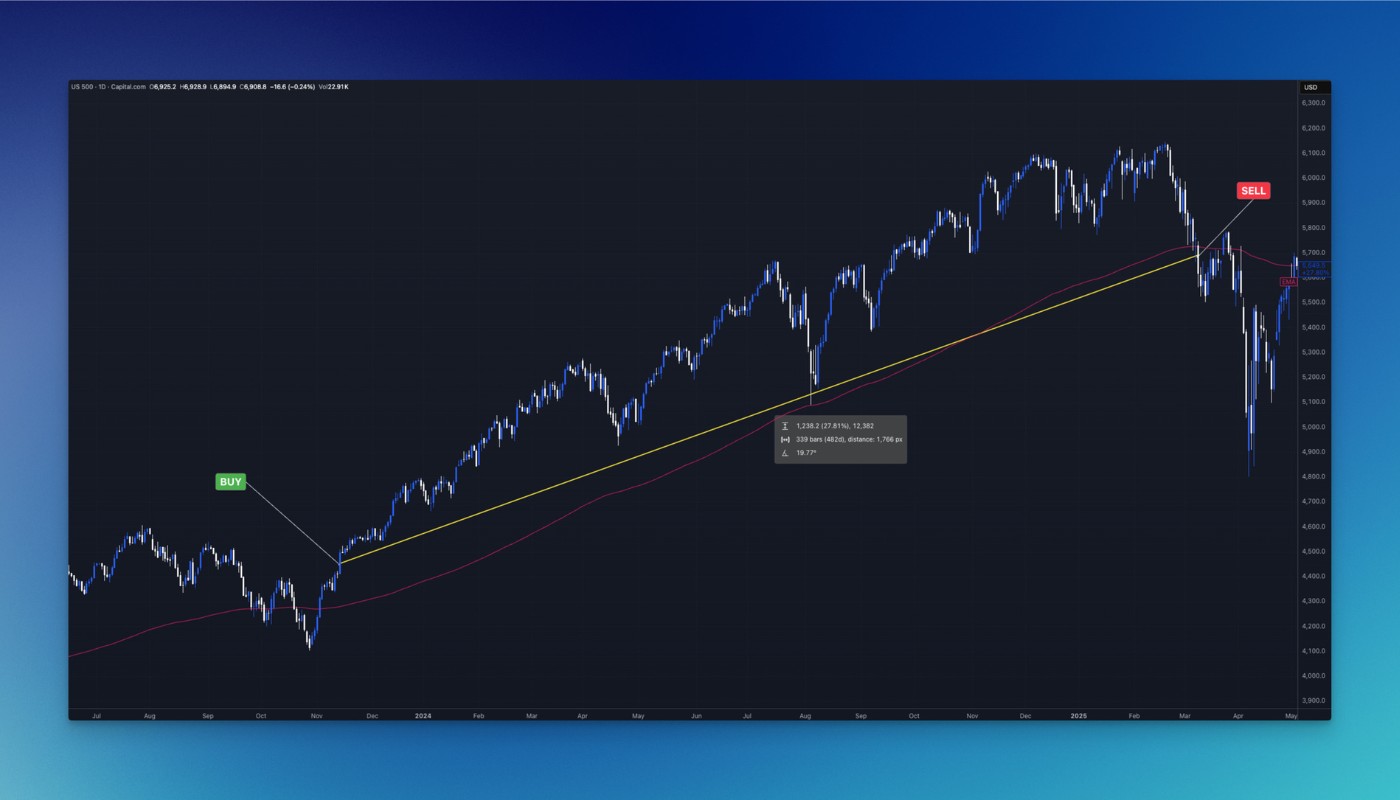
Position trading is a long-term trading style that is quite similar to investing.
Position traders focus on long-term market trends and may hold trades for several months or even years. The goal is not to catch exact market tops or bottoms, but to ride the entire trend from start to finish.
Because of the long holding period, position traders rely heavily on fundamental analysis, using technical analysis mainly as a supporting tool. While it’s possible to position-trade with technical analysis alone, combining it with fundamental analysis is strongly recommended for better context and precision.
Position traders usually make their decisions based on economic cycles, macro trends, and regional or industry-specific developments. From a technical perspective, they usually analyze long-term trend structure and use trend indicators such as moving averages.
Entries are typically made when long-term trends begin to form, and positions are closed when those trends weaken or come to an end.
Position trading requires a high level of patience and confidence in your decisions. You need to understand how markets move through cycles and be able to sit through temporary pullbacks and volatility without reacting emotionally.
Compared to more active trading styles, returns may come more slowly, but involvement is minimal. This makes position trading a largely passive approach. Many people use this style to make their trades work in the background while they focus on their career, business, or other priorities.
5. Investing
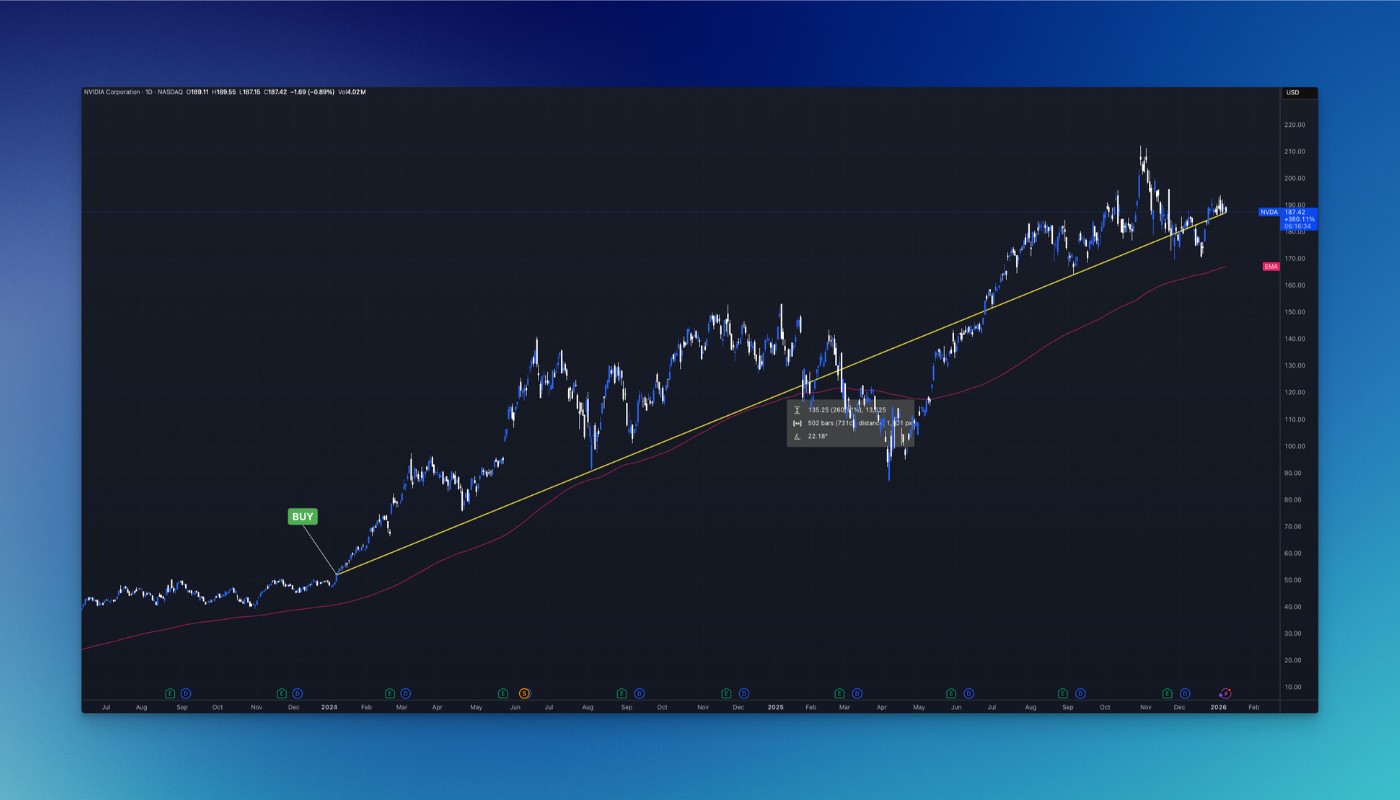
Investing is similar to position trading, but investors use a different decision-making logic.
Instead of focusing on short-term price swings or temporary trends, investors make decisions based on research and belief in a company, sector, or long-term idea. Investing requires a long-term vision and patience.
For example, someone might invest in companies operating in the AI space because they believe the technology will continue to grow and reshape the world. If that belief proves correct, those companies expand, adoption increases, and the value of their investments grows over time.
Others invest in dividend-paying stocks to generate steady, recurring income simply by owning shares.
Some investors prefer strong, established companies like Apple. Instead of trying to predict short-term price movements or betting on startups, they invest in market leaders that have already demonstrated long-term growth, stability, and global dominance. As long as those companies continue to lead their industries, investors keep benefiting from their expansion.
Another common approach is investing in ETFs and index funds. These represent baskets of companies or entire markets that have historically grown over long periods of time. Rather than betting on a single company, investors spread risk across many businesses within an economy or sector.
What all investors have in common is that they are not focused on perfect entry timing and do not react to short-term volatility. What matters most is whether their long-term predictions still make sense. As long as the business or sector continues to perform and grow, investors stay invested.
Investing in financial markets is similar to investing in real estate. You don’t track the daily price change of a house you buy, and you don’t expect instant returns. The goal is gradual appreciation over time.
This makes investing the least time-consuming approach of all trading styles. It’s commonly used by people who want to grow their savings slowly and steadily in the background while focusing on their career, business, or other priorities.
How to Choose the Right Trading Style
Many traders follow other traders online and try to copy their strategies, without realizing that the same trading style may not suit them at all. There is no one-size-fits-all approach to trading, which is why choosing a style that fits you is far more important than copying someone else’s results.
To choose the right trading style, you need to consider a few key factors:
1. Time
Be realistic about how much time you can actually dedicate to trading.
Many traders try to force very active strategies into busy schedules. As a result, they end up trading inconsistently – starting and stopping over and over – simply because the strategy doesn’t fit their daily routine.
Think about your daily schedule. Do you work full-time or part-time? Do you have flexible hours or fixed ones? Someone working shifts or flexible hours may find it easier to trade actively during the day. But if you work a strict 9–5 job, trading during the most active market hours can be difficult.
A trading style that requires constant screen time won’t work if your routine doesn’t allow it. Choose a style you can stick to consistently, not one that looks exciting on paper.
Consistency is key to success. A trader who spends 30 minutes a day for two years will achieve far more than a trader who trades eight hours once a month.
2. Personal Life
Your responsibilities outside trading also matter.
Family, relationships, and daily obligations all will affect your focus and consistency. Constant interruptions and divided attention will eventually show up in your results.
The goal isn’t to sacrifice your personal life for trading. The goal is to choose a trading style that fits naturally into your daily life and allows you to stay consistent without unnecessary stress.
3. Personality
Your personality plays a huge role in choosing the right trading style.
Many traders fall in love with strategies that don’t suit them at all. It’s like a toxic relationship – exciting at first, but impossible to maintain long-term.
Ask yourself:
• Are you a patient or impatient person?
• Can you trust a plan long enough to let it work?
• Do you need to be in control at all times, or can you stay calm while trades are open?
• Do you need fast results to stay motivated?
If you struggle with patience, slower and longer-term strategies may feel frustrating and boring. If you need constant control, very passive styles can cause anxiety because trades are left unattended for long periods.
On the other hand, very active strategies come with their own challenges. They require making fast decisions, operating under pressure, taking risks, and dealing with regular winning and losing streaks. If you struggle with stress, emotional reactions, or impulsive behavior, highly active trading styles can quickly become overwhelming.
The goal isn’t to label one approach as better than the other. The goal is to find a balance between activity level and psychological comfort. A style that matches your mindset will always outperform a style that constantly pushes you into emotional extremes.
It’s important to be brutally honest with yourself about what you can and can’t handle because your personality will show up in your trading whether you like it or not.
It’s also important to remember that self-improvement is part of every trader’s journey. Discipline, patience, and trust in your strategy can and should be trained. But choosing a style that aligns with who you are right now will make that process much easier.
4. Starting Capital
Your trading capital is your fuel – it’s the main tool you use to generate returns in the markets.
How much capital you manage matters because different trading styles are built for different goals.
Long-term oriented strategies aim for slower but more stable growth, while more active strategies come with higher risk but greater potential for faster growth. When choosing a style, you need to be clear about your priorities – whether you want to protect and steadily grow what you already have, or take on more risk in an attempt to achieve faster progress.
More passive styles like investing or position trading work at a slower pace and are often used to protect money against inflation and growing savings. Here, returns usually come from long-term price growth and compounding rather than frequent trading. Returns are typically smaller but more consistent. Passive styles tend to work best when more capital is invested – larger investments allow small percentage gains to translate into more meaningful dollar amounts.
Active trading styles aim to profit from smaller price movements. These styles can help grow capital faster, but they also demand more time, energy, discipline, and emotional control. If you’re starting with a smaller account and your goal is faster growth, more active trading styles may feel more attractive. Just remember that faster progress always comes with higher risk and greater involvement.
Regardless of the style you choose, all of them become more flexible and easier to manage with more capital. Trading small accounts can be especially challenging because returns are directly linked to account size. Traders often invest a lot of effort but see limited results, which can lead to frustration, impatience, and overtrading.
It’s completely fine to start small. Just don’t stay small while expecting the markets to do all the work. Add capital gradually – that will make risk management easier, reduce pressure, and allow your strategies to reach their full potential.
Trading is a business. And like any business, the more you support it, the easier it becomes to grow.
Choosing the Style That Fits You
Choosing a trading style is not about finding the most profitable strategy or deciding which styles work and which don’t. All trading styles can be profitable when applied correctly.
Instead of chasing the “best” strategy, focus on finding one you can stick to and execute consistently. Trading is not a shortcut to wealth – it rewards discipline, patience, and consistency over time.
If you’re not sure where to start, slower and more structured styles are usually the safest entry point. They give you time to think, learn, and build discipline without constant pressure. As your experience grows, you can always explore more active strategies later.
Your trading style today doesn’t have to be your trading style forever. What matters most is starting with an approach that fits you now and allows you to grow without burning out.